


The crescent under a full moon
Tags : AstroTrac TT320X-AG, AstroWizard, Optolong L eNhance filter, Photoshop, StackingWizard, ToupTek ATR585C, William Optics SpaceCat 51
Comments : 0
Being aflicted with a case of GAS for astro equipment, I splashed out on a new dedicated DSO cooled astro camera, the Touptek ATR 585c. With clear skies, I didn’t let the full ,moon put me off testing out the new setup.
Using the trusty Optolong L-eNhance dual narrowband filter helped to cut through the moon’s glare and pick out the h-alpha rich region, along with a hint of the OIII shell of the crescent itsef. Captured with a total of 4.5 hours integration time through the SpaceCat 51.
For stacking and processing, I used the excellent new Stacking Wizard and Astro Wizard programmes recently developed by Lucomatico.
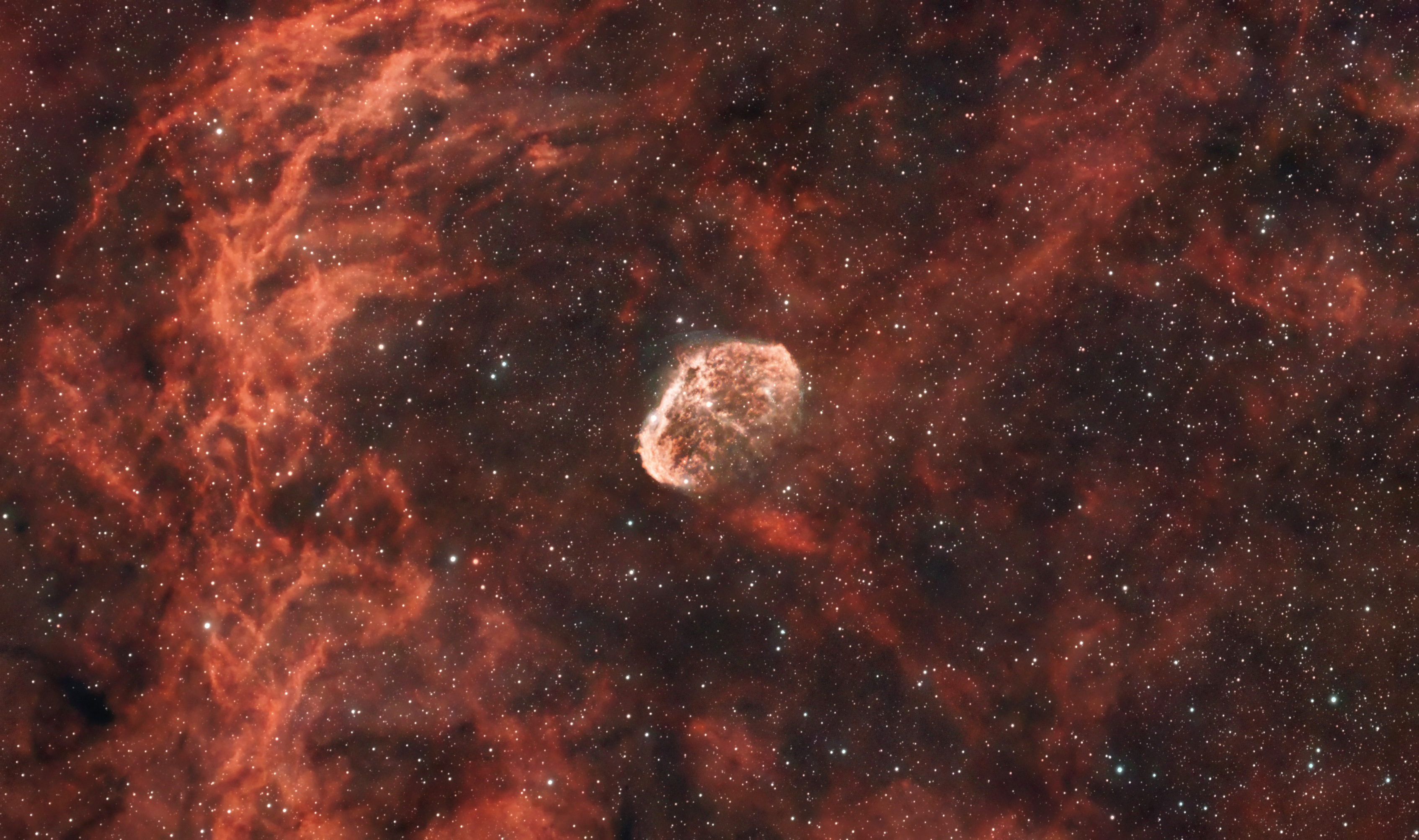
Image details: Taken with ToupTek ATR585C and William Optics SpaceCat 51 250mm / f4.9. Total of 4.5 hours of exposure time (135 x 120 seconds) cooled to -10c at a gain of 50, using Optolong L-eNhance dual narrowband filter. Tracked with AstroTrac TT320X-AG. Unguided. Sequenced with N.I.N.A.. Stacked in Stacking Wizard with no calibration frames. Edited with Astro Wizard and Photoshop.
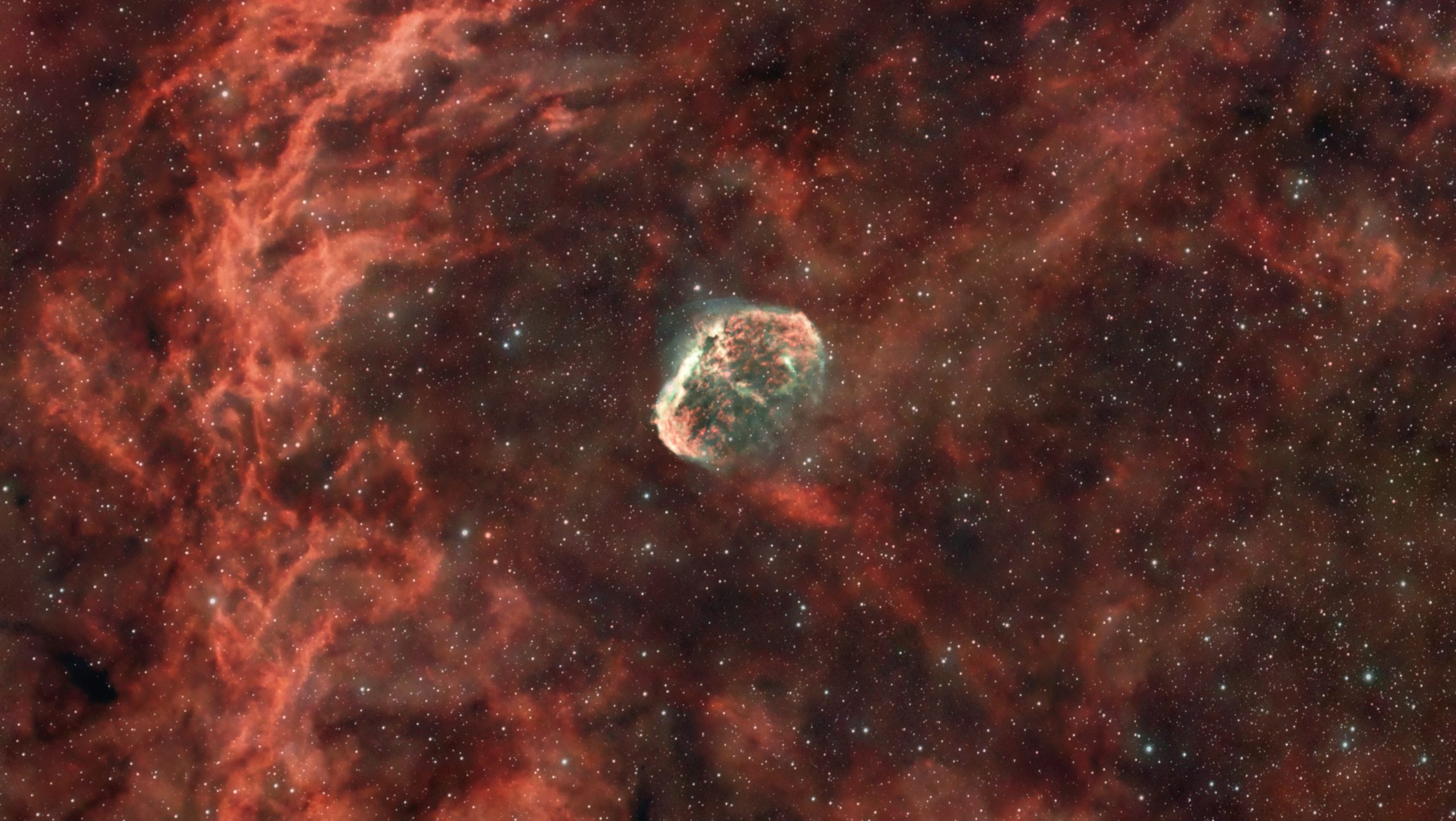
With the moon gone a week later I captured an extra 2 hours of data through an O3 filter to capture to Oxygen shell. Combining these in photoshop proved a little tricky and I’m not sure it enhances the original!
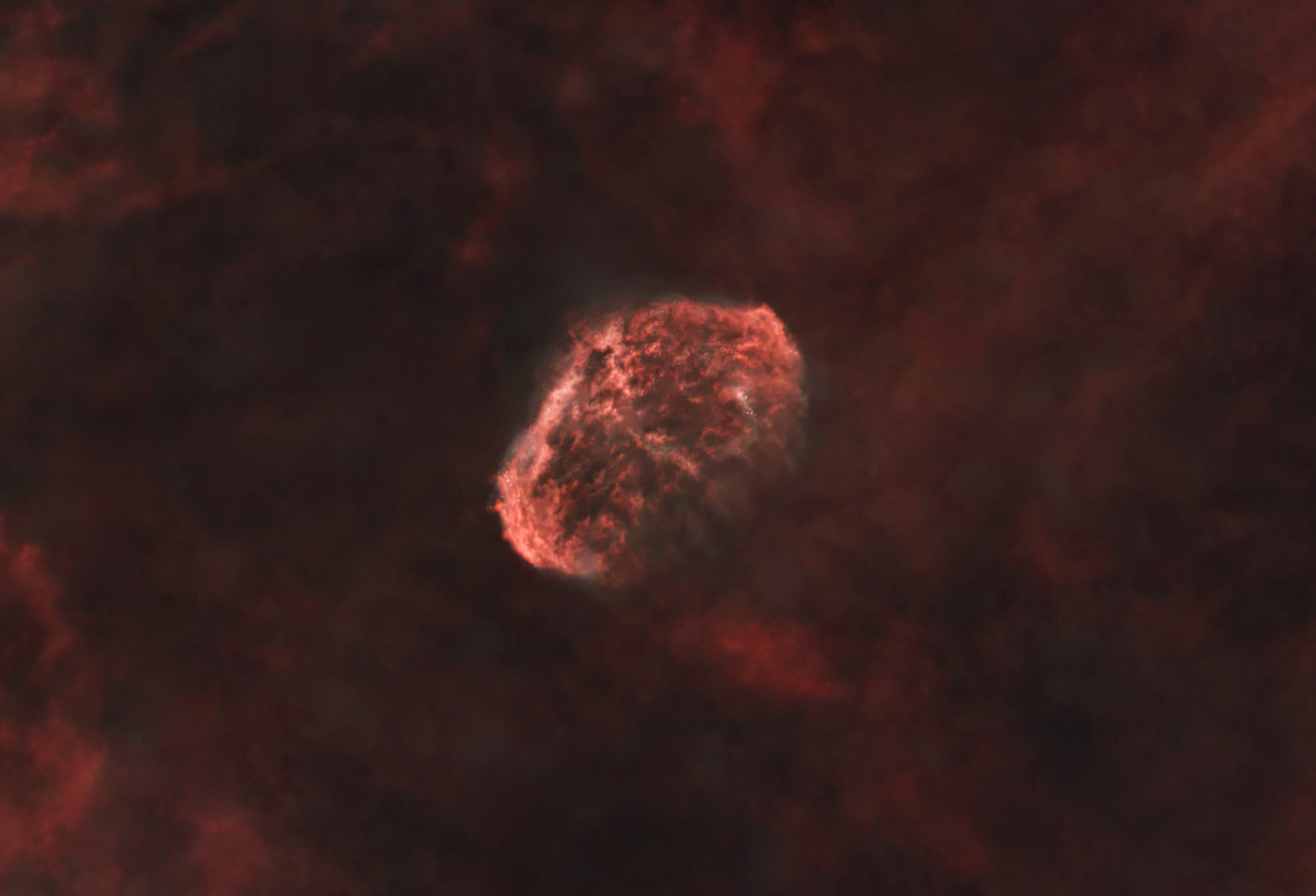
The original dual narrowband image taken through the Optolong L-eNhance filter.
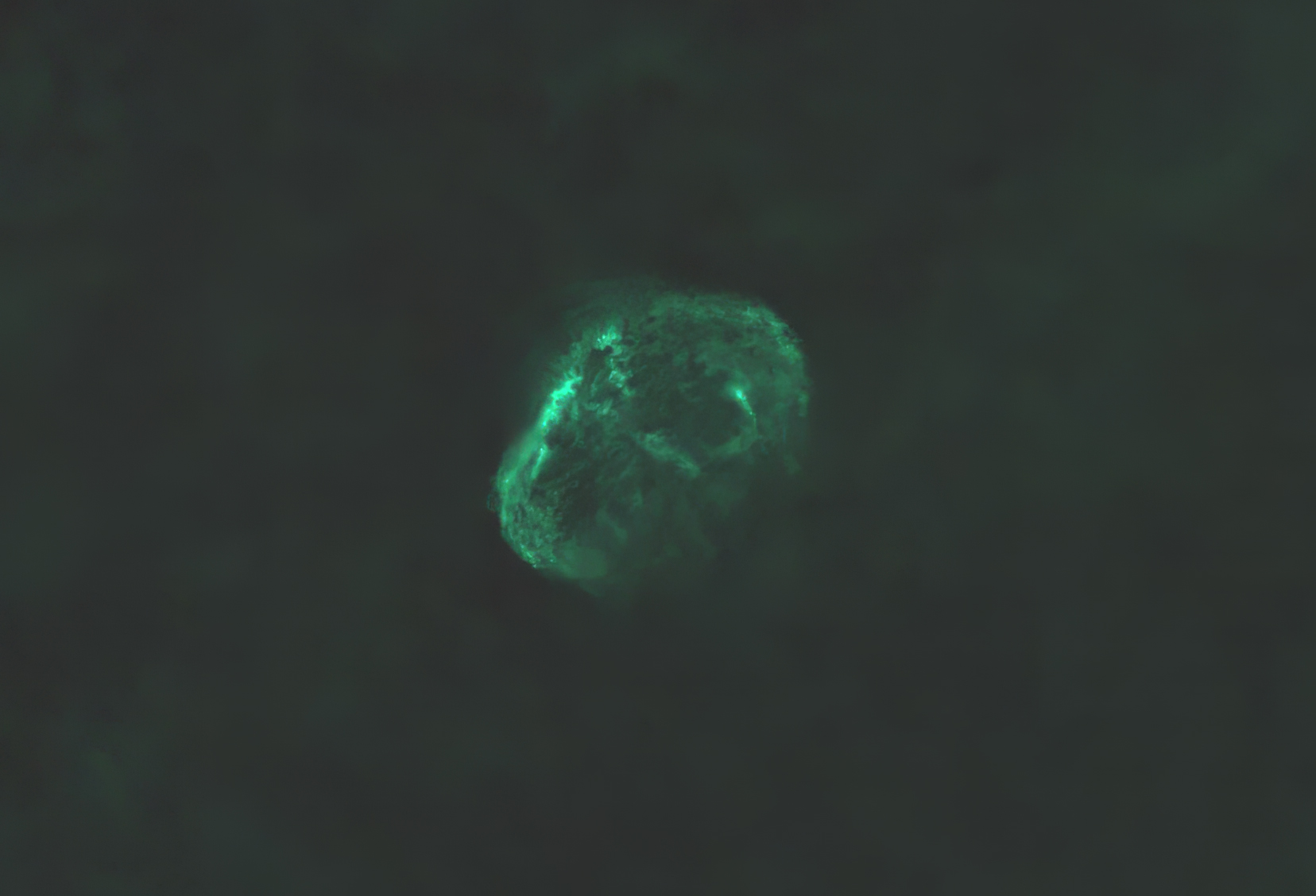
The stack of 2hrs of Oxygen3 data (60 x 120 seconds) shows some excellent filament details.
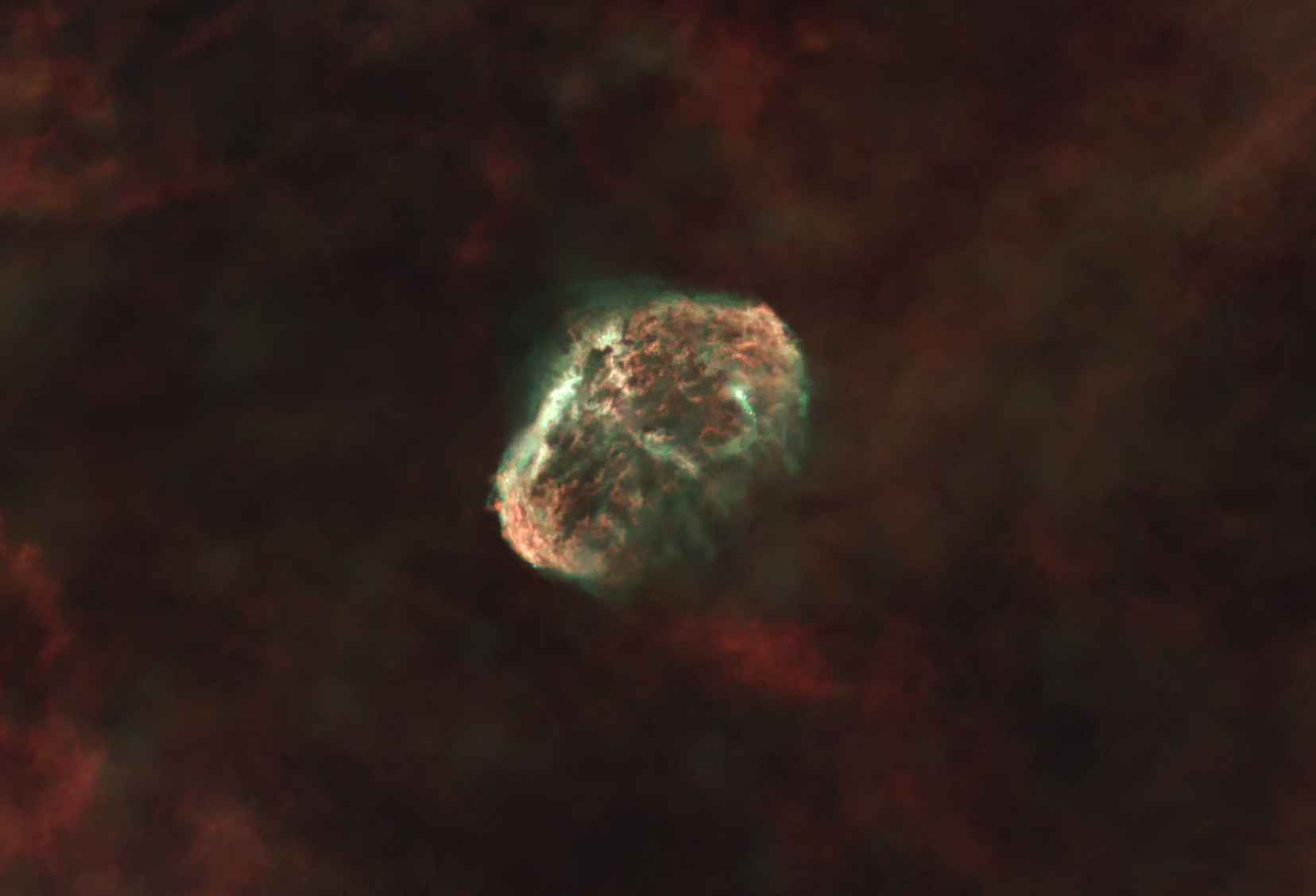
Combining the two data sets the image becomes muddled and less defined. I think this is probably best reserved for a monochrome setup, which I have in the works!